Canton's Tax Policy
The Canton, Massachusetts Assessor’s Tax Classification Hearing is the annual public hearing where the town decides how the total property tax levy is split among different property classes for the upcoming fiscal year. In plain terms: it determines who pays what share of the tax burden—residential vs. business.
What Happens at the Hearing?
Assessors present property tax burden shifts between residents and businesses. Then the Select Board votes to approved the Board of Assessors recommended tax burden shift. The maximum that both the Select Board and the Board of Assessors can approve under state law is a 1.75% shift of tax burden to commercial and industrial businesses. In Canton what typically happens at the hearing is the Assessors orally present some numbers and they recommend a very favorable tax burden shift for the business community.
How the Board Has Voted At the Hearings
Over the past 20 years the town has certified the maximum shift voted shift with the Division of Local Services at 1.75%, but this has never been implemented . Canton has certified this shift in the past and has the ability to do this again. The town has not utilize the max CIP shift allowed by the Division of Local Services over the past 20 years the town has moved the burden of over $1.1Billion dollars of tax liability from business to residents during this period. As a result taxing the CIP shift to the max could have saved residential taxpayers $26,000,000 over the last 20 years as shown on the Department of Revenue certification shown below. Many communities in Norfolk county vote their maximum shifts to favor residents as allowed by law, but this does not happen. Several towns in the county have a larger CIP value then Canton and they still choose to apply the maximum shift of 1.75.
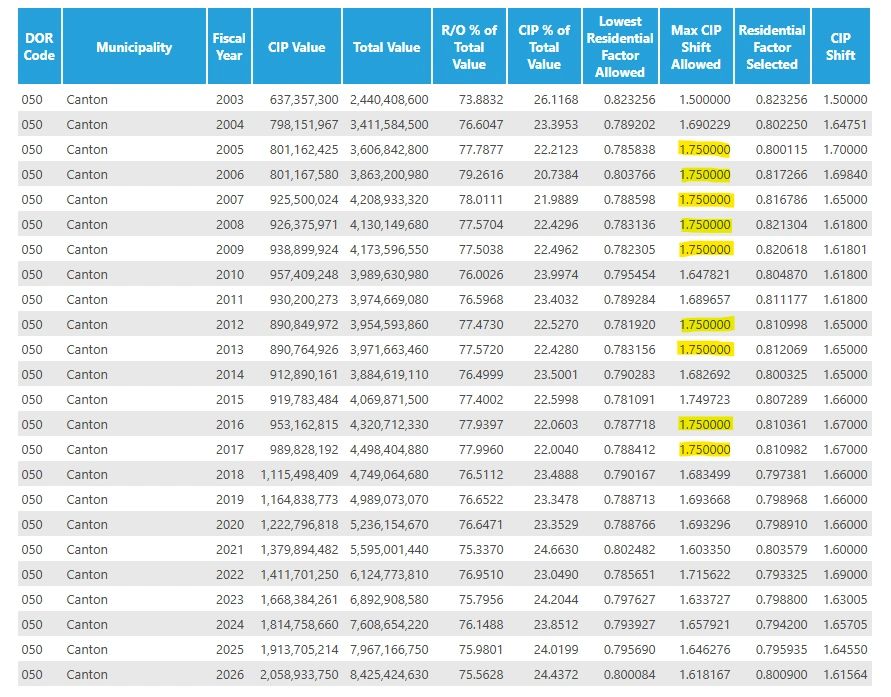
If the formula used to calculate this shift does not allow the town to achieve the 1.75 shift, then we have a commercial property assessment issue which I will get into later in this article.
Why Is Canton Shifting Tax Burden to Town Residents and Away from Business?
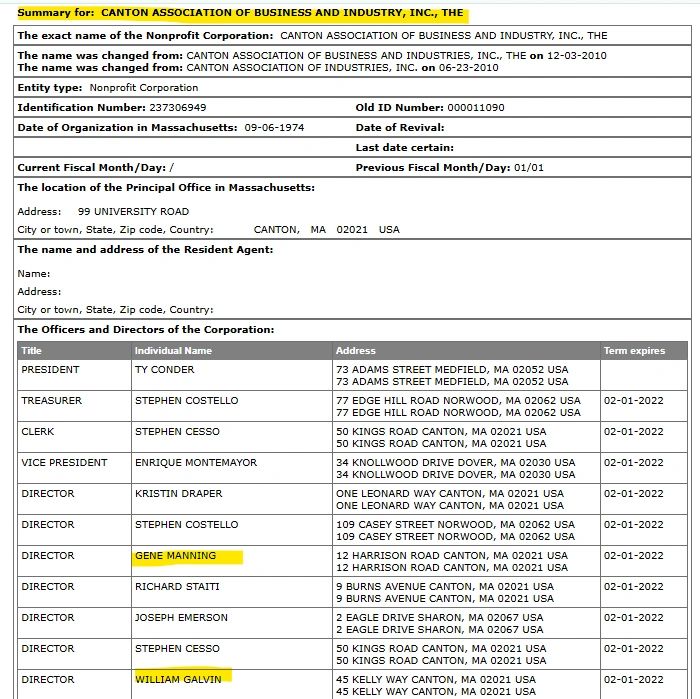
One appearance of a conflict of interest is that the majority and quorum of the elected Board of Assessors are listed as Directors for the Lobbying group Canton Association of Business and Industry, INC (CABI). The Chair of the Board of Assessors leads the Town's Economic Development committee and that's not the job of the assessors. The primary function of the Canton Assessors are to establish property values, ensure fair and equitable taxation, and administer abatements. Economic development is not the function of the Assessor, this is the function of the Select Board and the Economic Development committee does not have one sitting member of the Select Board. So the question is who is really running economic development in town and why was the economic development at a 20 year all time low in 2026?

You can see the Chair of the Select Board, and the other two voting members Trish Boyden and Susan Harrington present at the $500 a plate dinner at the CABI Christmas party a few days after voting to give tax breaks to the business and shift more burden to the residents. Photo credit The Canton Citizen.
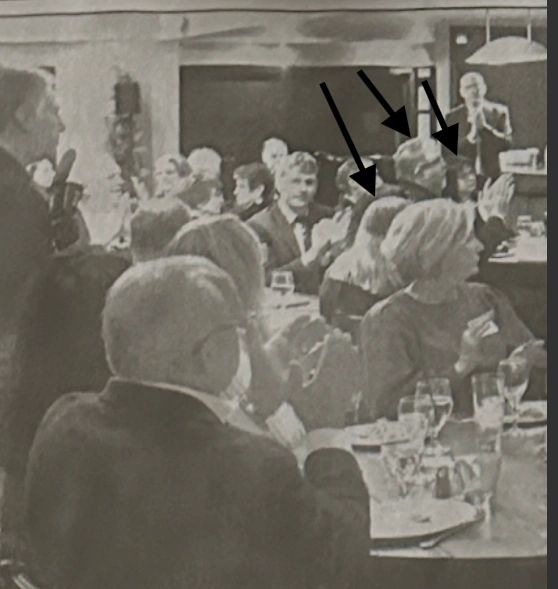

Also in attendance are the majority voters of the Board of Assessors. You can see from the photo above and the photo below that the chair of the Canton Board of Assessors and another member (majority voting members) of the Assessors Classification hearing are present at the same Christmas party just after they all voted to give tax breaks to businesses and tax residents more. Photo credit The Canton Citizen.
As you can see from the screenshot below that CABI advertises that they establish lines of communications with Canton Town Officials.

And what do the Canton residents get in return for moving tax breaks from business to financially stressed residents? A result of shifting millions of dollars of tax liability towards residents CABI gives $5,000 to the food pantry for the residents they hurt the most. If Town Officials enacted a socially responsible tax policy then residents would be less dependent on the food pantry. Most residents and seniors would all opt for a lower tax bill then asking for a hand out at the food pantry. This is why I'm pledging to donate my elected official compensation to a charity like the food pantry.

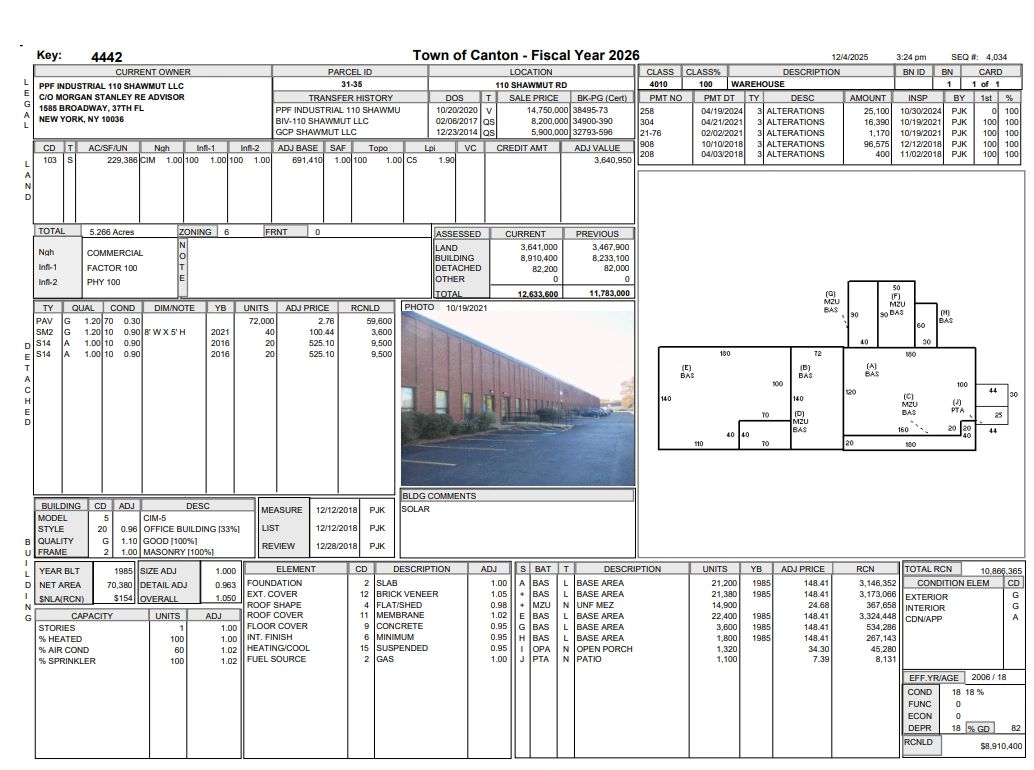
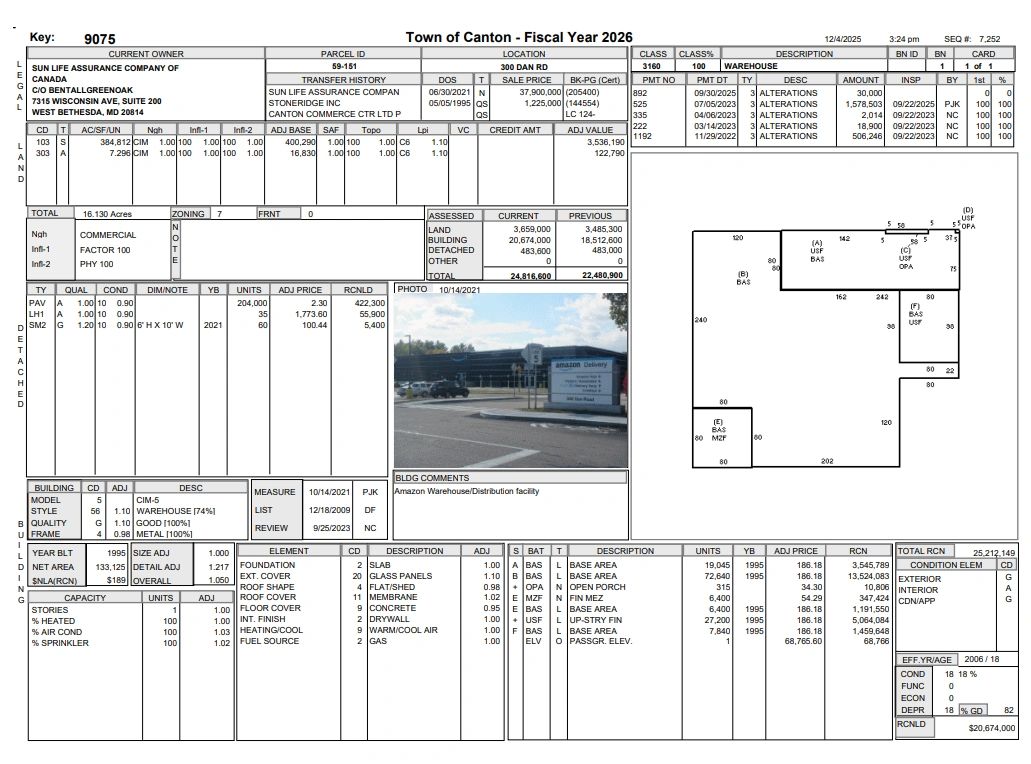
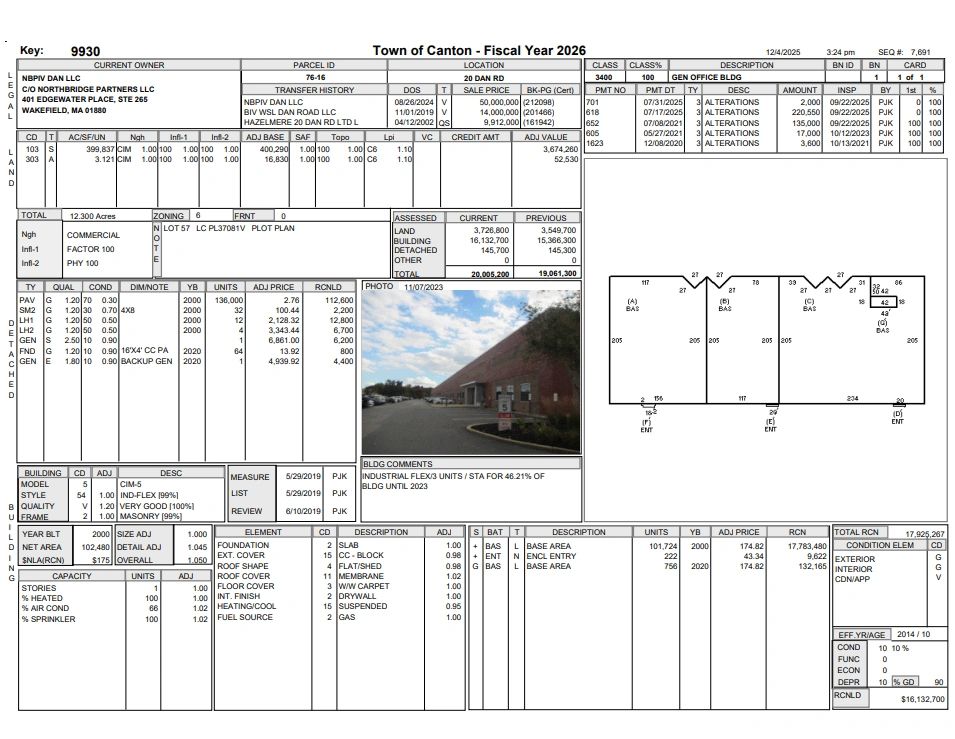
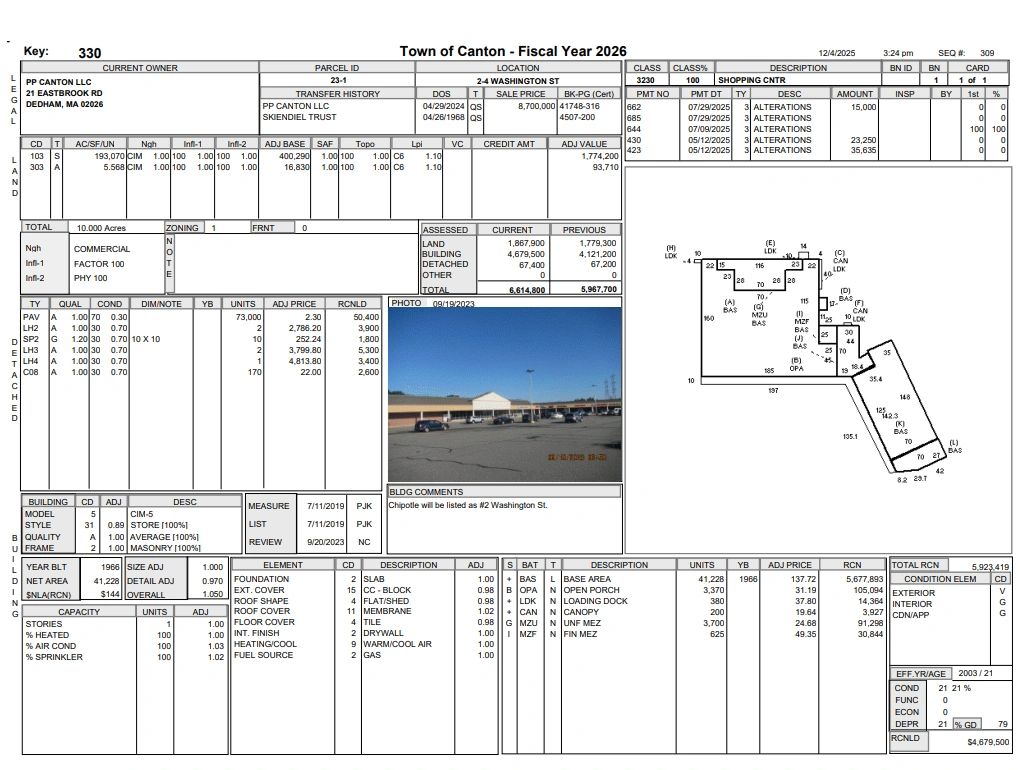
The tax certification that happens every 5 years, and we will find in this years certification (shown in the below image) that two properties are only taxed at 76% when the assessors website says they tax between 90-100% of market value. One of the properties in question is a CABI member. The other property is assessed $2,000,000 below the purchase price. These property valuation examples and many others undervaluation artificially lowers the CIP share of the tax levy, reducing the allowable CIP shift and increasing the burden on residential taxpayers. This is exactly what is happening in Canton. Here a a few examples and there are many more like this:
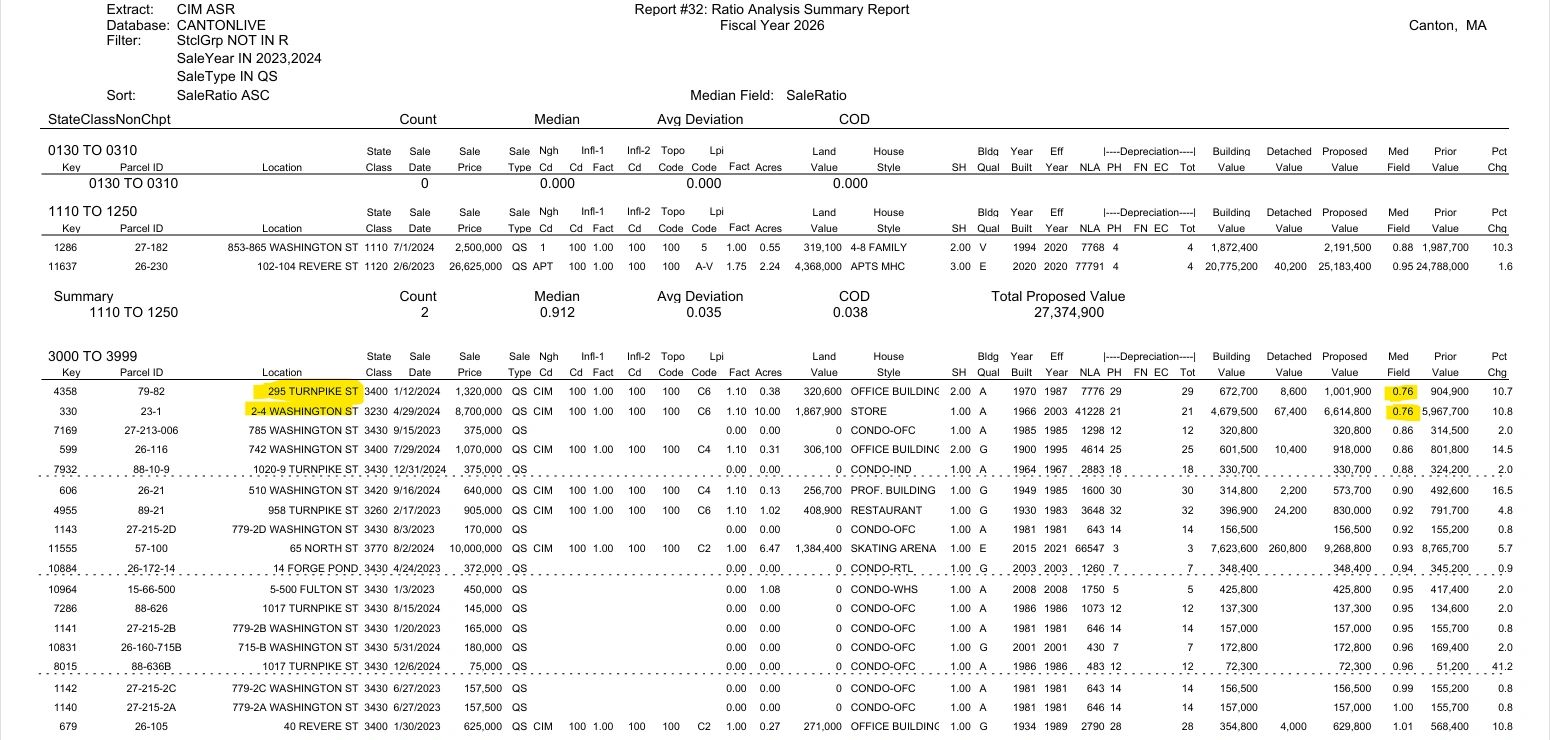
Major undervaluation's are happening on commercial parcels along Royall Street office campuses, Wellness Way, Dan Road industrial properties, Turnpike ST, Dedham ST, Shawmut RD, and multiple retail shopping centers. CIP undervaluation artificially lowers the CIP share of the tax levy, reducing the allowable CIP shift and increasing the burden on residential taxpayers. Here are few examples: